
At the current pace of installing solar panels on the roofs of households and companies, Serbia will reach its target of 500 MW of prosumer installations by 2030, part of the draft National Energy and Climate Plan, only in 2042, says energy consultant Dejan Stojadinović. His analysis “Two years of prosumers in Serbia” shows that at the current pace Serbia would use its rooftop solar potential in 340 years.
In the last two years Serbia has gained 3,038 prosumers. By the end of April 2024, prosumer status had been obtained by 2,226 households, 799 companies and three residential communities, within which 13 households became prosumers, Stojadinović says.
Over the past two years, Elektrodistribucija Srbije (EDS) connected on average about 90 households and 30 companies per month. The largest number of new prosumers was connected in June 2023.
Stojadinović states that the total installed capacity of these solar power plants is 51.16 MW.
“Serbia has set a target of 500 MW installed by 2030, ten times more, which is the goal of the National Energy and Climate Plan (NECP). At the current pace of development, that target will be reached only in 2042,” Stojadinović stresses.
According to the latest census, Serbia has almost two million houses (1,983,269), and their roofs, he adds, are the main potential for increasing the number of prosumers. Of these, slightly more than a fifth (370,258) were built after 2000. These newer houses are, in his words, the most suitable for solar panels without additional structural work.
But if the current pace of connecting prosumers continues, this potential would be used only in 340 years, Stojadinović warns.
The analysis showed that only 0.09 percent of all households (2.59 million) are prosumers, with an installed capacity of 18.2 MW.
Of Serbia's 169 municipalities, prosumers have appeared in 157 (93 percent). So far, not a single household has become a prosumer in 11 municipalities: Bela Palanka, Bosilegrad, Crna Trava, Krupanj, Kuršumlija, Preševo, Prokuplje, Ražanj, Trgovište, Tutin and Žitište.
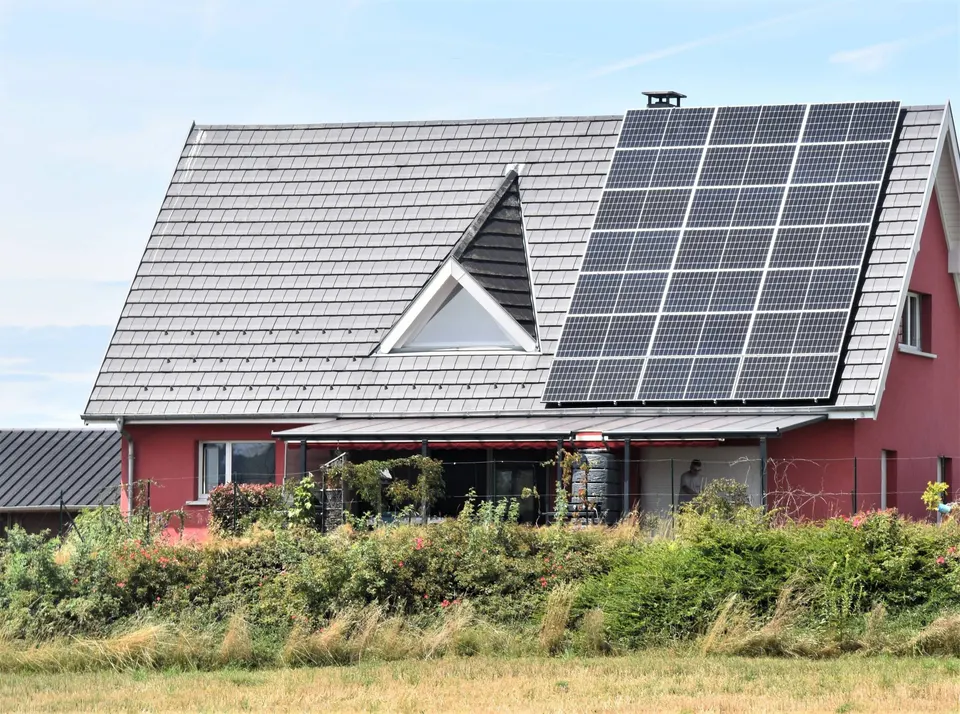
As for companies, 379 have built photovoltaic plants with a capacity of 33.1 MW. Stojadinović points out that of the 799 metering points at which companies became prosumers, as many as 325 belong to the mobile infrastructure company A1 Towers Infrastructure.
The largest individual prosumer in Serbia is Toyo Tires in Inđija, with a 7.5 MW solar power plant, while all the others are below 1 MW, the analysis states.
Taking all three categories of prosumers into account, only nine municipalities have no prosumers at all: Crna Trava, Krupanj, Kuršumlija, Preševo, Prokuplje, Ražanj, Trgovište, Tutin and Žitište.
Stojadinović recalls that the legal framework has also partly changed over the past two years. Amendments to the Law on the Use of Renewable Energy Sources in April 2023 limited installed capacity to 10.8 kW for households and, from 1 July 2024, to 150 kW for companies. Until 1 July, companies could install plants of up to 5 MW.
Amendments to other regulations also made it possible to calculate excise duty and VAT on the difference between the electricity taken from and delivered to the grid, rather than only on electricity taken, as at the beginning, which was unfavourable for prosumers.
The question, of course, is how to speed up the development of prosumers. Ivana Jovčić, executive director of the Center for the Advancement of the Environment, says there is still room to make producing electricity for one's own needs even more profitable and closer to the standards of countries that have supported this concept for longer.
Above all, she means reducing the fee for access to the distribution system (network charge), exempting prosumers from the renewable energy fee and considering a model for buying surpluses at the end of the settlement period.
“This would bring the calculation of electricity costs in line with net-metering standards, and these positive changes would be an additional incentive for more prosumers, greater citizen participation in the energy transition and decarbonisation, and the further development of a sustainable power system,” she says.
The Center has also identified additional measures, such as extra support and state partnership in encouraging citizens to build solar power plants: incentives in the form of a VAT refund (or reduction) on equipment and the option of separating the locations of electricity production and consumption.
It would also help to increase the number of residential communities that are prosumers by establishing a dedicated model, giving them the same rights as households and companies, and allowing third parties to own prosumers' power plants.
“There is no doubt that prosuming in Serbia has attracted great interest from citizens, but the growth in the number of prosumers does not reflect that interest, and further work on these measures is clearly needed,” Jovčić emphasised.
Source: Balkan Green Energy News (in Serbian)
👉 See other solar power plants we have built
Would you like to cut your electricity costs too?
👉 Contact us and we will prepare an offer tailored to your needs.
We guide you through the whole process of signing a prosumer contract, so that you can hand your surplus electricity to EPS for storage and later use it to reduce your electricity bills. To learn more about the prosumer model in advance, see the official brochure of the Center for the Advancement of the Environment (in Serbian).

