
Solar panels are a technological marvel of the modern age, turning sunlight into electricity in a sustainable and environmentally friendly way. They play a key role in reducing harmful emissions, protecting the environment and reducing dependence on fossil fuels. In this article we look at what solar panels are made of and how this remarkable technology works.
What solar panels are made of
Solar panels, often called photovoltaic or PV panels, are made from different materials depending on the type of panel. The most common types are monocrystalline, polycrystalline and thin-film panels. Each of them uses specific materials to turn sunlight into electricity.
- Monocrystalline panels: made from silicon in the form of pure single crystals. These panels are efficient, but also more expensive to produce.
- Polycrystalline panels: use silicon in the form of many smaller crystals. They are slightly less efficient than monocrystalline panels, but more affordable.
- Thin-film panels: use thin layers of various materials such as amorphous silicon, cadmium telluride and others. They are flexible, lighter and usually cheaper to produce, but less efficient.
How solar panels work
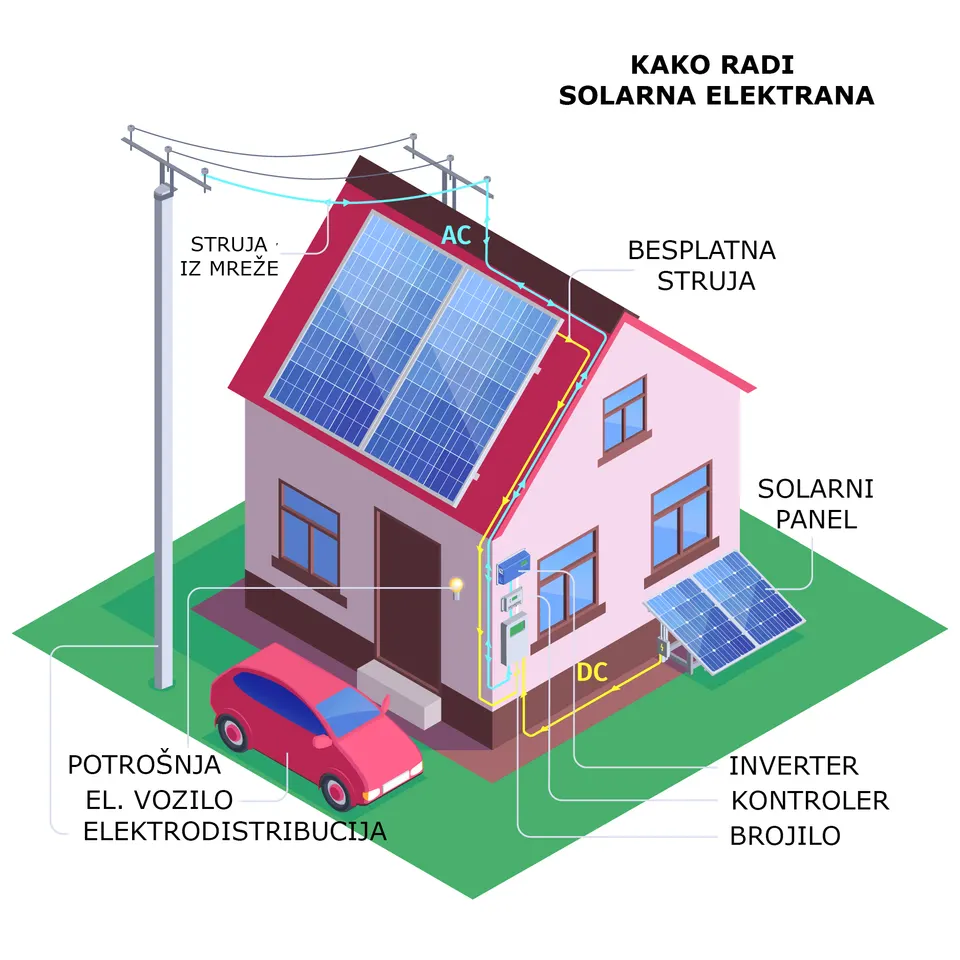
Solar panels work through a process called the photovoltaic effect, which converts the energy of light photons into electricity. Here is the basic process:
- Light absorption: solar panels are covered with photovoltaic cells that absorb photons from sunlight.
- Electron generation: when photons hit the photovoltaic cells, they release electrons from the atoms of the material in the panel.
- Creating an electric current: the released electrons create a voltage and a flow of electrons through the panel, producing electricity.
- Inverter: the electricity produced is direct current (DC), but household appliances use alternating current (AC), so a device called an inverter converts DC into AC.
- Storage and/or distribution: the electricity can be used to power the home or stored in batteries for use at night or on cloudy days.
Solar panels are an environmentally friendly source of energy because they produce no harmful emissions and reduce the need for fossil fuels. They also reduce electricity bills in the long run and often pay for themselves through lower electricity costs or by delivering surplus energy back to the grid.
With constant advances in technology and falling solar panel prices, solar energy is expected to play an even more important role in the future as a sustainable energy source for homes and industry.
👉 See other solar power plants we have built
Would you like to cut your electricity costs too?
👉 Contact us and we will prepare an offer tailored to your needs.
We guide you through the whole process of signing a prosumer contract, so that you can hand your surplus electricity to EPS for storage and later use it to reduce your electricity bills. To learn more about the prosumer model in advance, see the official brochure of the Center for the Advancement of the Environment (in Serbian).

